

Something Has Moved In.
Let’s move it out – Safely,
and For Good.


Wildlife Issues Get Worse
When You Wait
WHY TIMING MATTERSOnce an animal has found a warm place to settle in, things tend to build from there, more nesting, more damage, more mess to clean up later. Dealing with it early is usually simpler and usually costs less than waiting until it's a bigger job.
● Scratching, thumping, or movement in the attic, walls, or ceilings
● Sounds that seem to move between rooms or floors
● Nesting material in the attic, crawl space, or garage
● Visible damage around the roofline, soffits, vents, or fascia edges
● Droppings or strong odor in enclosed spaces
● The same activity showing up in the same spot, especially at night
Signs To Watch For
The Sooner You Act, The Easier And Less Expensive The Solution.
ANIMALS WE REMOVEWildlife We’re Called
To Help With Most
Every job is a little different — but the goal is always the same. Confirm the activity zone, remove the animal humanely, close the entry point, and prevent repeat problems.
Raccoons
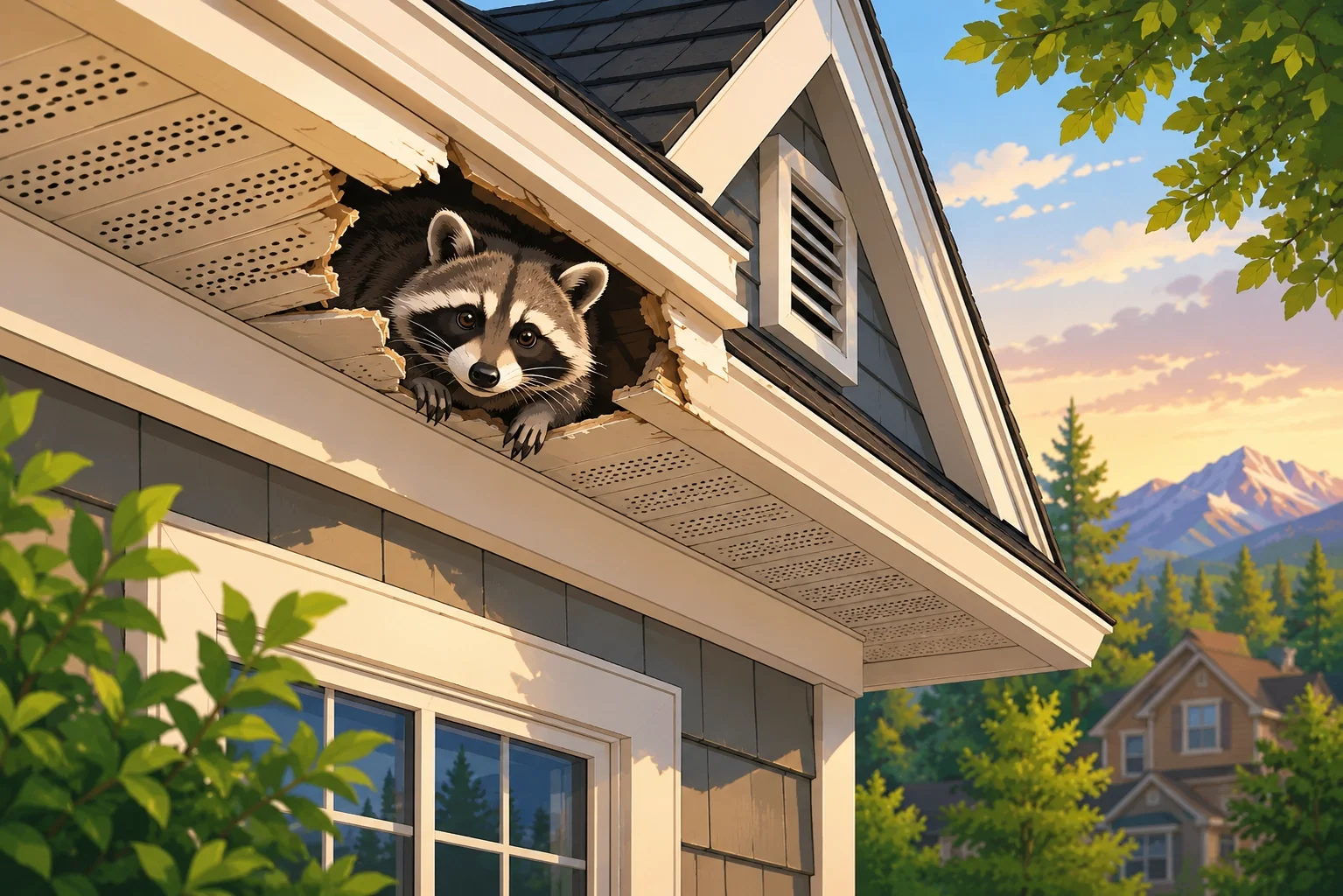
Soffits • Vents • RooflineRaccoons are strong enough to tear right through a soffit or vent to get into an attic, and once they've made an opening, it's usually a big one. That's part of why raccoon damage often comes with company, other animals find that same hole and use it too.
Squirrels
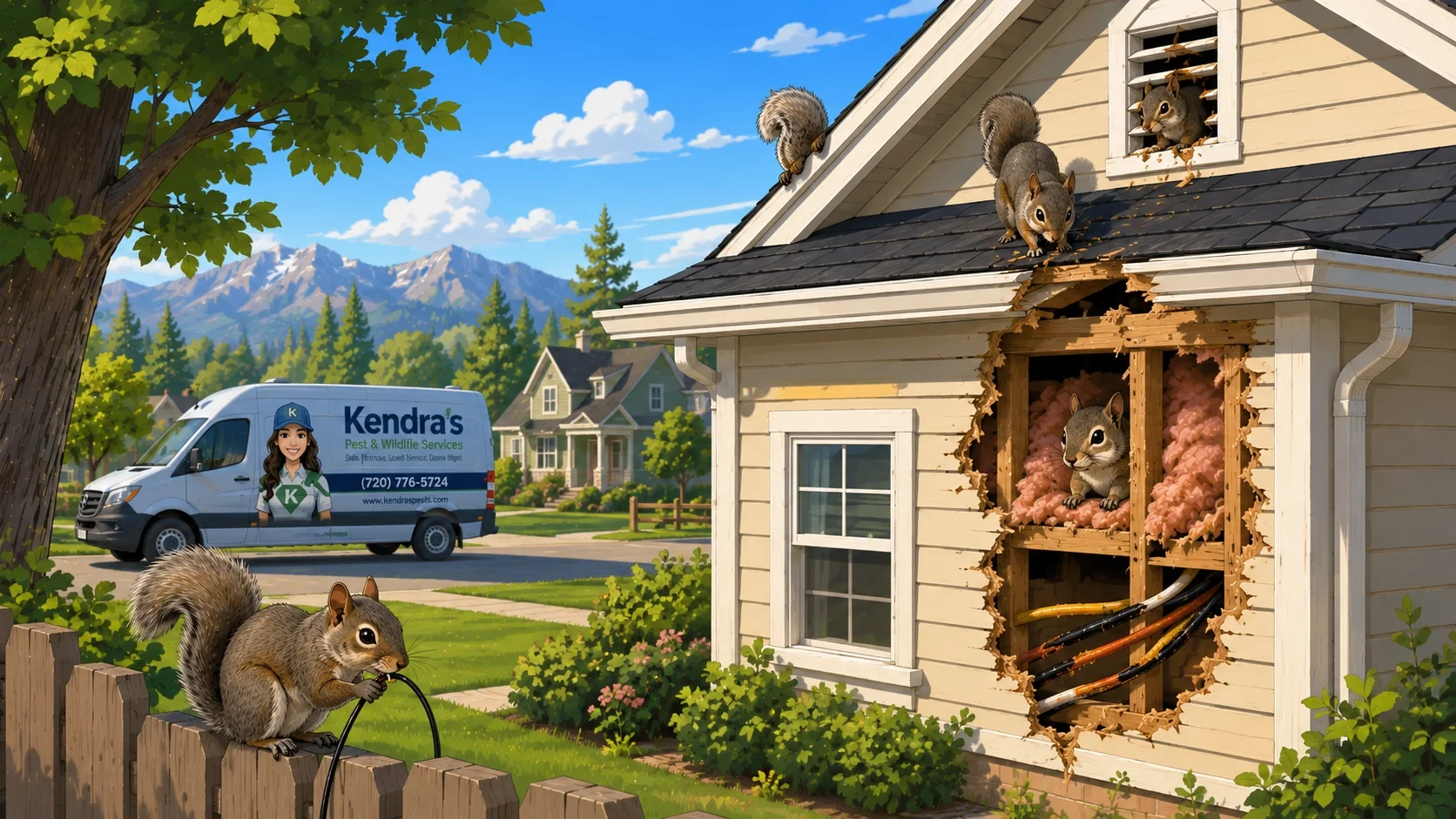
Walls• Insulation • RooflineSquirrels are quick, and they don't give up easily. They'll chew through a surprisingly small opening to get into insulation or a wall cavity, and once they're in, that same chewing habit often moves on to wiring, which is a real fire risk if it goes unaddressed.
Dealing with something else?
If something has moved in
that doesn't belong, we can inspect
and guide you to the right next
step — whatever it is.
How We Compare
WHAT’S INCLUDEDHere's what's included in every wildlife removal job — and how that stacks up against the typical approach.
✕ The wildlife is gone, but the opening it used remains
✕ The next animal finds that same easy way in
✕ No record of where the animal got in or what it damaged
✕ Nesting material or contamination left behind goes unaddressed
✕ Same problem, a few months later
Just Removing The Animal
✓ Humane removal, then we find and seal the actual entry point
✓ That same opening is less likely to invite the next visitor
✓ You know what we found and what we did
✓ If there's contamination, we tell you and quote cleanup clearly
✓ The goal is you don't hear that same noise again
With KENDRA’S
COMMON QUESTIONSFrequently Asked Questions
-
No. We use humane methods, exclusion techniques, and repairs only — no poisons, ever. It's safer for your family, your pets, and the animals themselves.
-
Raccoons, squirrels, skunks, birds in vents, and other small wildlife in attics, crawl spaces, garages, and enclosed areas. Not sure what you have? Tell us what you're seeing and we'll help identify it.
-
Yes. Removal is only half the solution. We find the entry point and recommend exclusion and repairs — because an unsealed entry just invites the next visitor.
-
Signs like scratching and nesting material help narrow it down. When activity is harder to confirm from the outside, we can use a thermal imaging camera to identify where it's concentrated and recommend the right next step faster.
-
It depends on the day and our schedule, but if it feels urgent, let us know. When possible, we move quickly on jobs that need fast attention.
Ready to Remove the Wildlife
and Stop Repeat Entry?
Tell us what you're seeing, hearing, or noticing — and where you're located. We'll guide you to the right next step.
Humane removal, and we're careful with the methods we choose

Entry point sealing included comes with the job, not as an add-on
Local Team, and we handle the full scope ourselves, start to finish