
If You’re Seeing Signs,
Rodents Are Already Active.
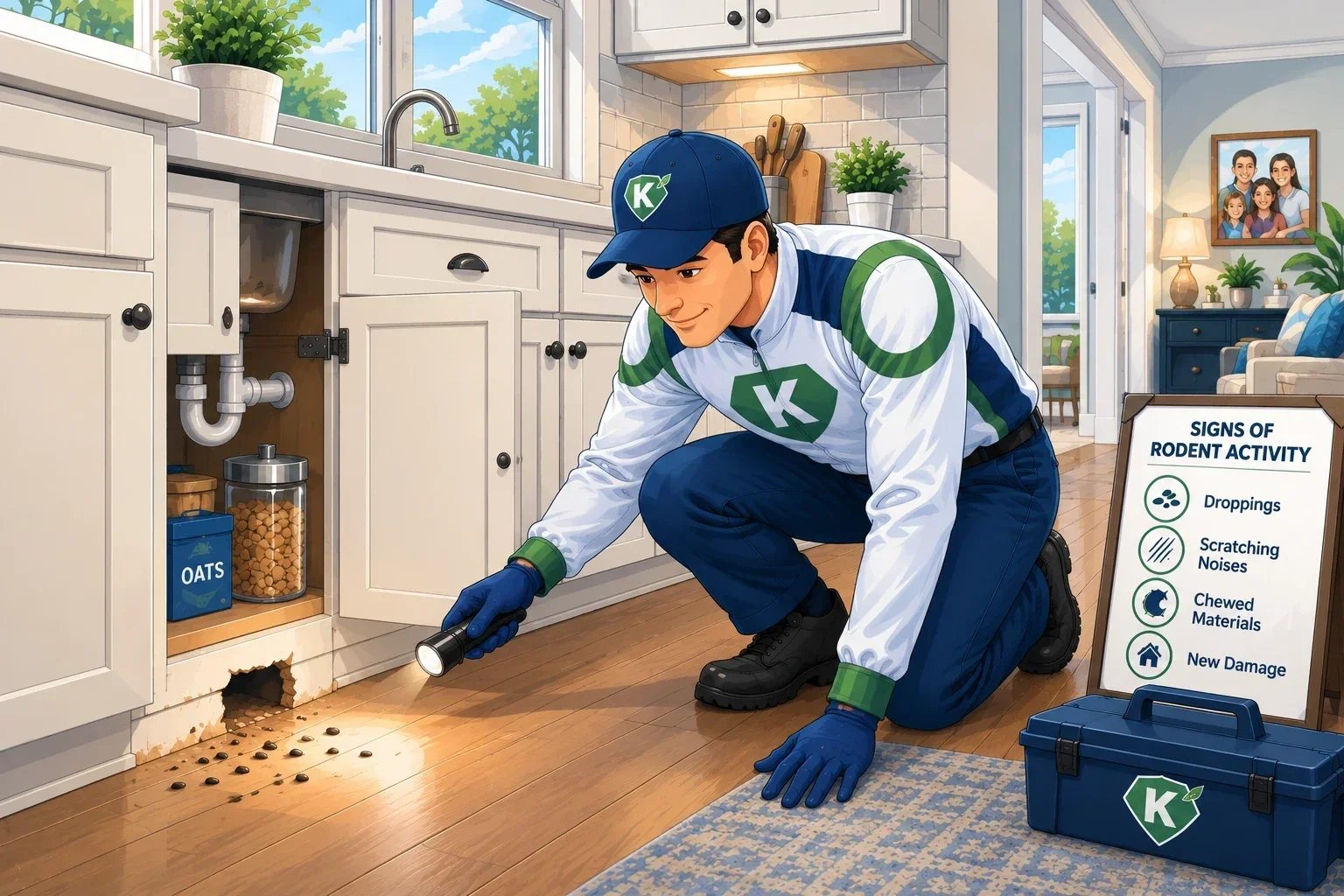
Droppings, scratching, or new damage mean rodents have already found a way in. We help you deal with what's there now and, just as important, keep it from happening again.
WHY THIS MATTERSRodent Problems Get Serious Fast
Rodents multiply quickly, and a lot of the damage happens somewhere you can't see: inside walls, under insulation, behind storage areas. By the time you notice droppings or scratching, they've usually been there a while already.
Property Damage
Chewed wiring and gnawed structural materials get more expensive to fix the longer they go unaddressed.
Health Risks
Droppings, urine, and nesting material can carry Salmonella, leptospirosis, and hantavirus, a serious respiratory illness. It's a real reason not to handle this yourself.
Rapid Multiplication
A single mouse can have dozens of offspring within months, which is exactly why a small issue behind a wall can turn into a full infestation quickly.
HANTAVIRUS
Never disturb rodent nesting material on your own. Call us first.
Hantavirus spreads through contact with rodent droppings, urine, or saliva, including breathing in dust from disturbed nesting material.
Common Signs of
Rodents in Your Home
WARNING SIGNSRodent issues often go unnoticed until there's real damage. Here's what to watch for and what it usually means.
Droppings
Worth a Look
Small dark pellets in drawers, pantries, or behind appliances usually mean rodents already inside.
1
Scratching at Night
Act Soon
Rodents are most active after dark. Scratching or movement in the walls or ceiling is one of the clearest signs that rodents are active.
2
Chewed Wiring or Materials
Fire Hazard, Act Soon
Frayed cords or shredded insulation in the attic or crawlspaces aren't just a rodent problem. They’re also a real fire risk.
3
Greasy Rub Marks
Address Early
Dark smears along baseboards come from oils in a rodents’ fur, left behind on the same paths they travel again and again.
4
Musty Odor
Address Early
A lingering, musty odor in the basement or garage is usually urine or nesting material nearby, even if you can't see anything yet.
5
Nesting Material
Watch For More Signs
Shredded paper, fabric scraps, or insulation fibers tucked in a hidden corner usually mean a nest has already been built close by.
6
Not sure what you're seeing? Send us a quick description and we'll guide you.
WHAT WE HANDLE
Common Rodents in Douglas County
& Surrounding Areas
These are the ones we see most often out here, whether it's a house near open space or a place tucked into a neighborhood. If what you're dealing with isn't listed, tell us what you're seeing and we'll help you figure it out.
INSIDE HOMES
House Mice
Kitchens • Walls • Garages • Storage
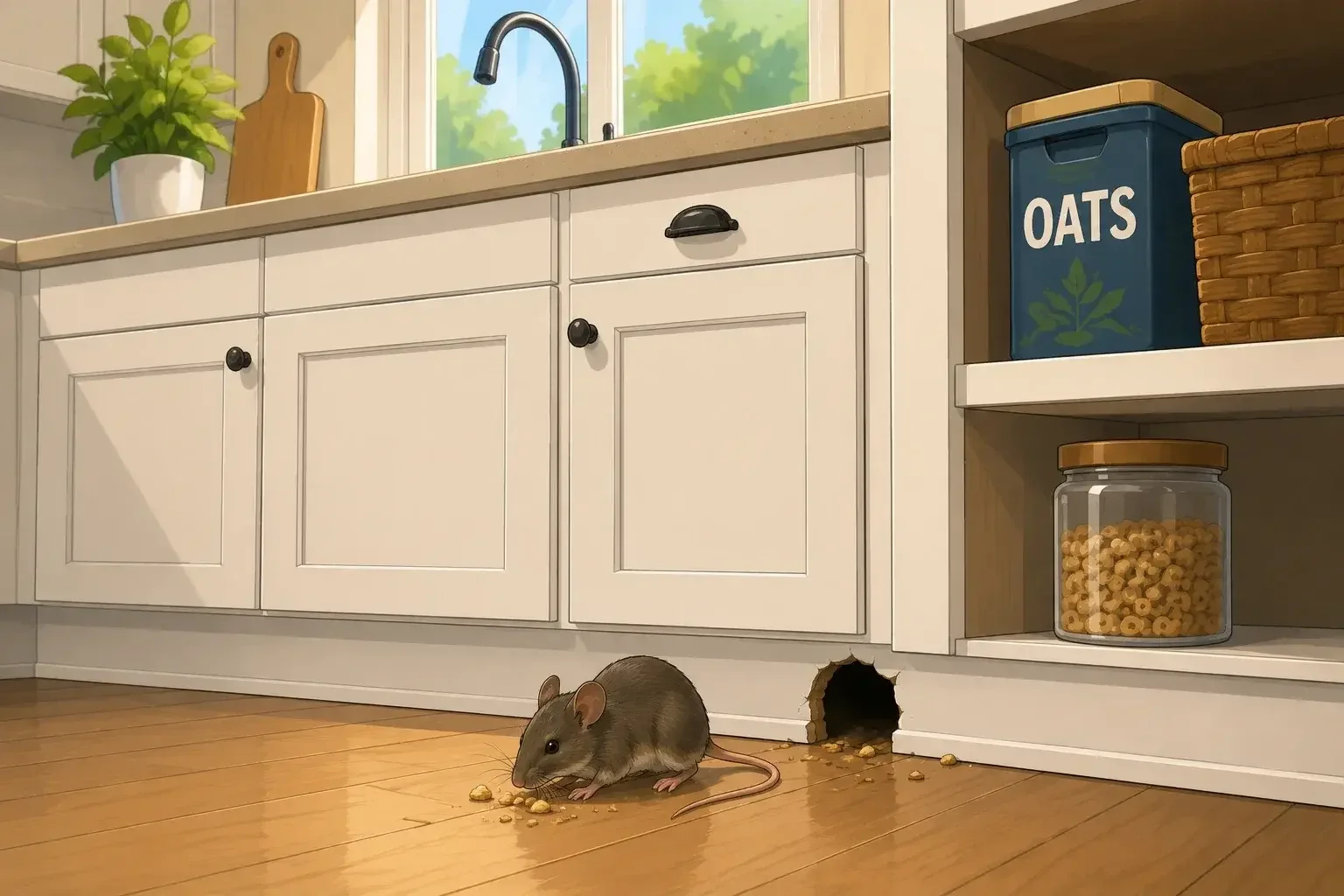
Small and quick to multiply, house mice are usually heard before they’re seen, scratching in the walls at night, and often found later chewing through stored boxes and food packaging. Once they're in, they don't stay in just one spot for long.
GROUND-DWELLING
Norway Rats
Basements • Trash Areas • Garden Beds
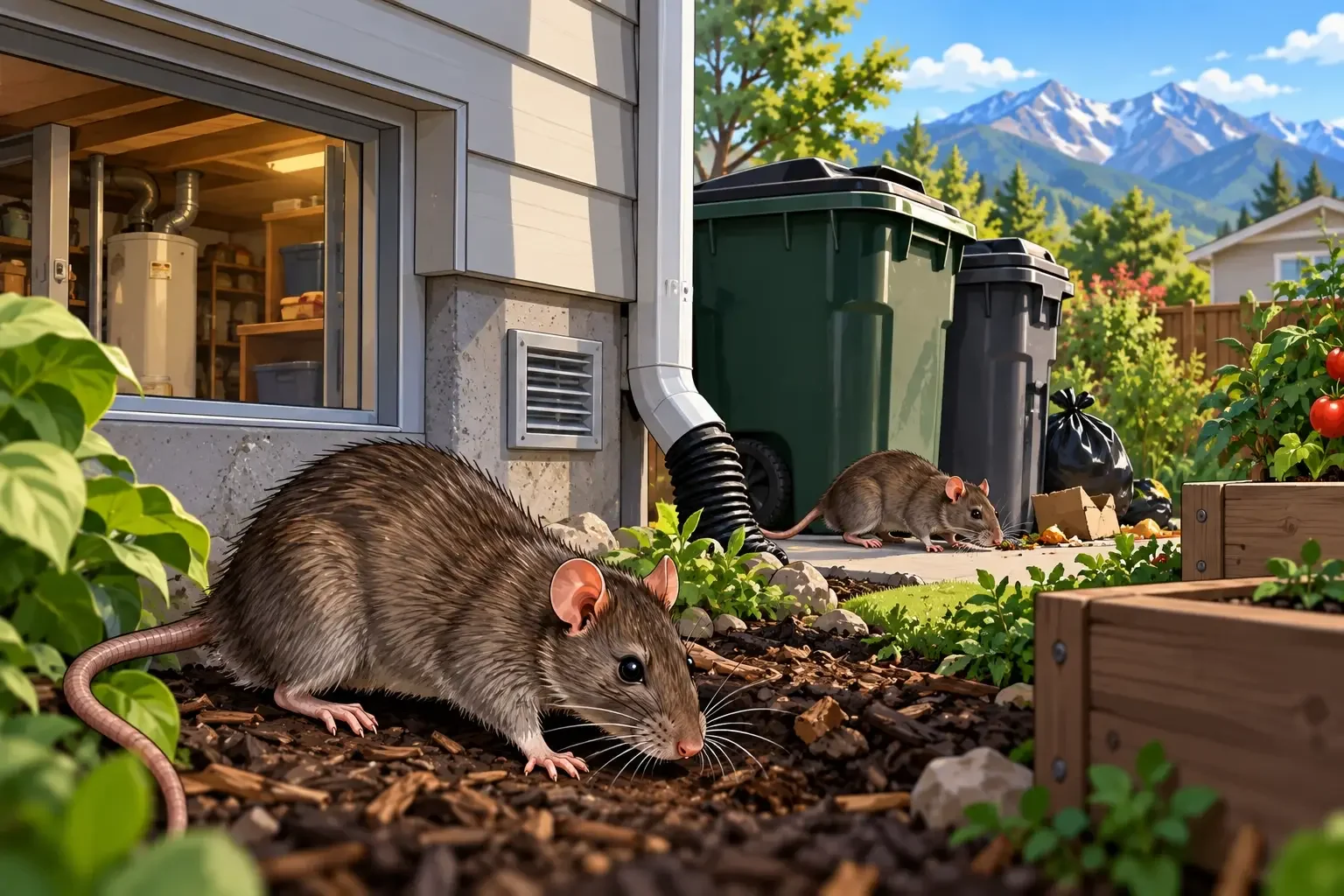
Rats are larger than mice and a lot more determined. They chew through insulation and wiring, and you’ll often find them near trash or compost, or tunneling through flower beds and grass. They can be harder to get rid of than mice, and the damage adds up quickly, so it’s best to call us sooner rather than later.
AGILE CLIMBERS

Roof Rats
Attics • Rafters • Rooflines
Good climbers, roof rats often get in from a nearby tree branch or along the roofline itself, not through the ground level at all. Once they're in the attic, they can do quiet damage to insulation and wiring for a while before anyone notices.
LAWN TUNNELERS

Voles
Lawns • Gardens • Landscaping Roots
Voles tunnel through lawns and garden beds, damaging roots and grass as they go. You'll usually notice thin, visible runways cut through the grass, along with small burrow openings. These are often mistaken for mole or mouse activity.
UNDERGROUND

Pocket Gophers
Underground • Yards • Irrigation Lines
Pocket gophers dig extensive tunnel networks below the surface, cutting through roots and irrigation lines as they go. Most of the damage happens out of sight, so by the time you notice dying patches in the lawn or a sprinkler line that's stopped working, they've usually been at it for a while.
WHAT’S INCLUDEDWhat Your Service Includes
Every situation is different, so we start with a real inspection, not a guess.

Targeted inspection – interior & exterior
Removal strategies based on what we actually find
Assessment of contamination
Clear action plan: what we found & what happens next
Recommendations to reduce what's attracting them
Follow-up guidance on what to watch for
Straight talk: if rodents are getting in from somewhere outside what we're addressing, we'll show you exactly what we're seeing and what it'll take to handle it. No surprises.
Plan
A recommendation built around your home, not a template we bring to every job.
Inspect
We look for activity, find the entry points, and get a real sense of how far it's spread.
Our 4 – Step Approach
1
2
Treat
Careful, considered methods, with your family in mind first.
3
Prevent
Guidance on reducing what's attracting them, and what to watch for next.
4
OFTEN PAIRS WITH THISExclusion Services
Rodent control handles what's active right now, but if they're getting in through an open gap, that gap's still there afterward. Exclusion seals it up so the same problem doesn't just start over. We only recommend it when your home actually needs it.
Flexible to Fit
What You Need
SERVICE OPTIONSOne-time help to stop current rodent activity, or ongoing maintenance to reduce repeat issues. or ongoing maintenance to reduce repeat issues. We'll recommend the simplest option based on what we find.
ONE-TIMEOne-Time Rodent Service
Best for active signs. We inspect thoroughly, address the current issue, and give clear prevention steps.
ONGOING PLANOngoing Rodent Maintenance
Over the long term we build a schedule based on your home, activity type, and seasonal patterns.
If entry points are the driver, Exclusion Services is often the best long-term fix — we'll tell you what we see and why.
CLEANUP & CONTAMINATIONCleanup of
Contaminated Areas
Rodent activity leaves behind droppings, urine, nesting material, and sometimes contaminated insulation. When an infestation has been active for a while, cleanup isn't just about odor — it's about making the space safe again.
We'll tell you exactly what we're seeing during the inspection, explain the level of contamination, and recommend the right next step. Cleanup is quoted separately based on the size, access, and condition of the area.
WHAT WE ASSESSContamination Checklist
● Droppings in attics, crawlspaces, or storage
● Urine-soaked insulation or nesting material
● Airborne risk from disturbed nesting areas
● Damaged insulation requiring removal
● Odor from hard-to-reach enclosed areas
COMMON QUESTIONSFrequently Asked Questions
-
The most common ones are droppings in kitchens, pantries, garages, or attics; chewed materials; scratching in the walls or ceiling at night; greasy rub marks along baseboards; and a musky odor in enclosed spaces. If you’re noticing any of these, it’s worth looking into early.
-
Voles usually show up outdoors — thin runways in the grass, small burrow openings, and damage to lawns or plant roots. Mice are more likely to leave droppings inside. Either way, we can take a look, confirm what you**’ve got**, and recommend the right next step.
-
We think about your family and pets first. We lean on prevention and sealing up entry points, so we can use less. And we’ll walk you through what we’re doing before we start.
-
If rodents are getting in through gaps or vents, probably. Rodent control handles what’s active now. Exclusion closes the door so they don’t come back. We’ll only suggest it if your home needs it.
-
Yes. We quote it separately based on what we find**, and we’ll tell you what we recommend and** what’s optional so you can decide what’s right for you.
-
Yes. We do one-time visits and ongoing plans. We’ll help you pick based on what we find at the inspection and where the rodents are getting in.
Services That Pair Well
With Rodent Control
ALSO CONSIDERExclusion Services
Seal entry points for good →
Contamination Cleanup
Remove droppings & contamination →
General Pest Control
Full-home protection plan →
Ready To Stop
For Good?
Tell us what you're seeing and where you're located — we'll guide you to the right next step with honest advice, no pressure, and a fast response from a local team.
Free, no-obligation quote
No Neurotoxins
Family and pet-conscious approach always
Locally Owned
No Long-Term Contracts